David LaChapelle & Why Spectacular Critique Fails in the Post-AI Era
David LaChapelle has spent four decades committed to collaborative, labour-intensive image-making—building extensive physical sets, painting negatives, and working with set designers, prop makers and stylists in his visual worldbuilding. LaChapelle has consciously worked at the intersection between commercial and fine art photography, refuting any clean distinction between them. His core conviction is that artifice is real (à la Baudrillard), and the constructed worlds of the media space can nonetheless reveal profound truths. Through meticulously staged, colour-saturated photographs, he broaches the topics of consumerism, fame, and the centrality of spectacle in contemporary life, focusing on our fixation on appearance and superficiality through an often-humourous and hypersexualised critical lens. I want to reflect on his Lost + Found series, a work spanning multiple years and the precursor to his book ‘Good News’, as an important document of a pre-AI moment in contemporary image-making.
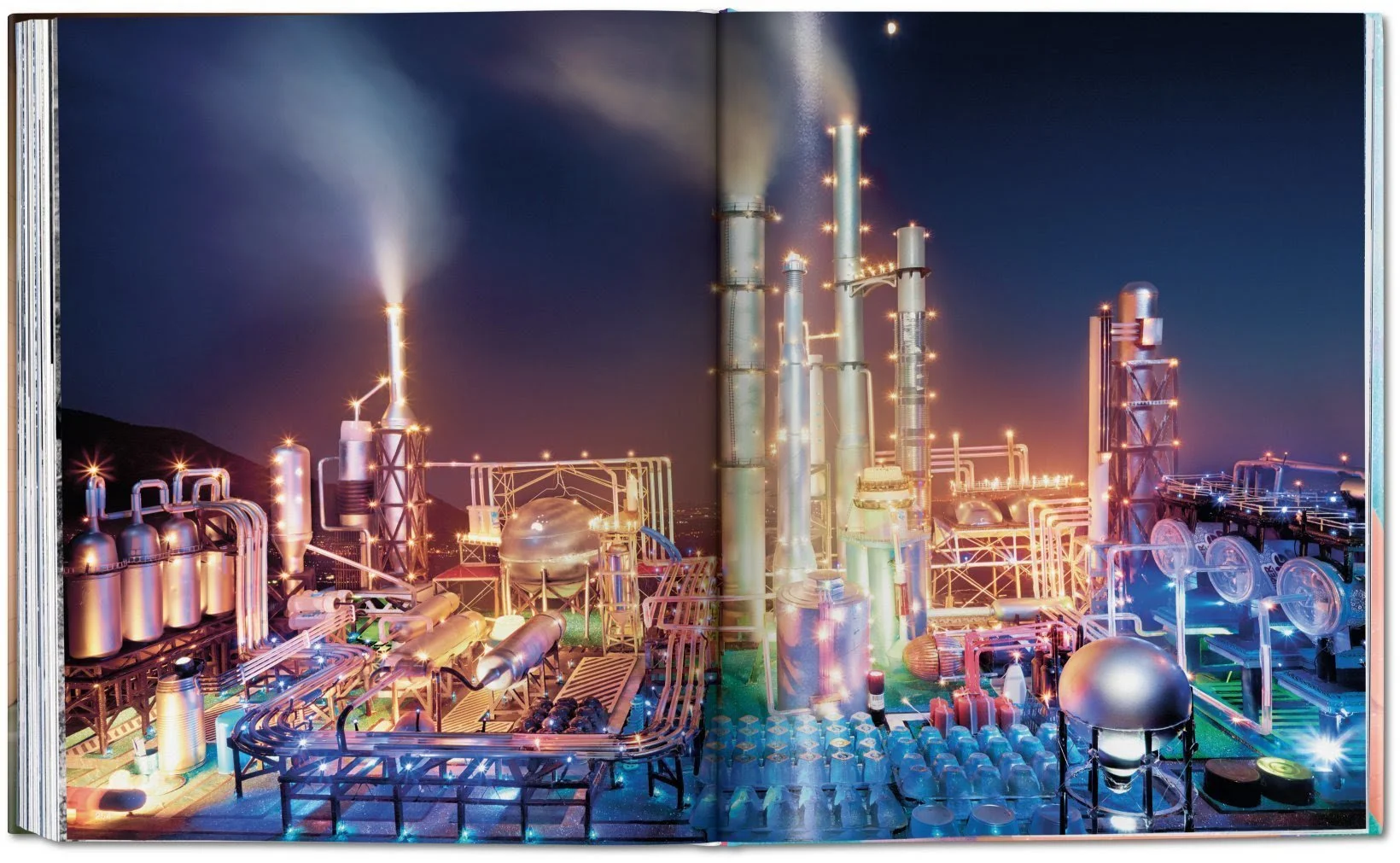
Industrial landscape from David LaChapelle’s Lost + Found Part I: Original Image Source.
The Lost + Found photographs operate across four distinct territories of ontological anxiety. In the domestic realm, childhood dolls and commodity goods persist amid catastrophe, their brightness obscene and jarring. Across the series, nude and near-nude bodies stand exposed and unarmoured, rendered vulnerable not through the infliction or suggestion of violence but through the simple fact of being visible in fairytale-like natural settings. And in images of infrastructure - oil refineries lit like cathedrals (or perhaps casinos), planes falling from clouds in plumes of coloured chemtrails and billowing white smoke — the systems and equipment that are meant to protect and serve us reveal their monumental indifference to human oversight and intervention.
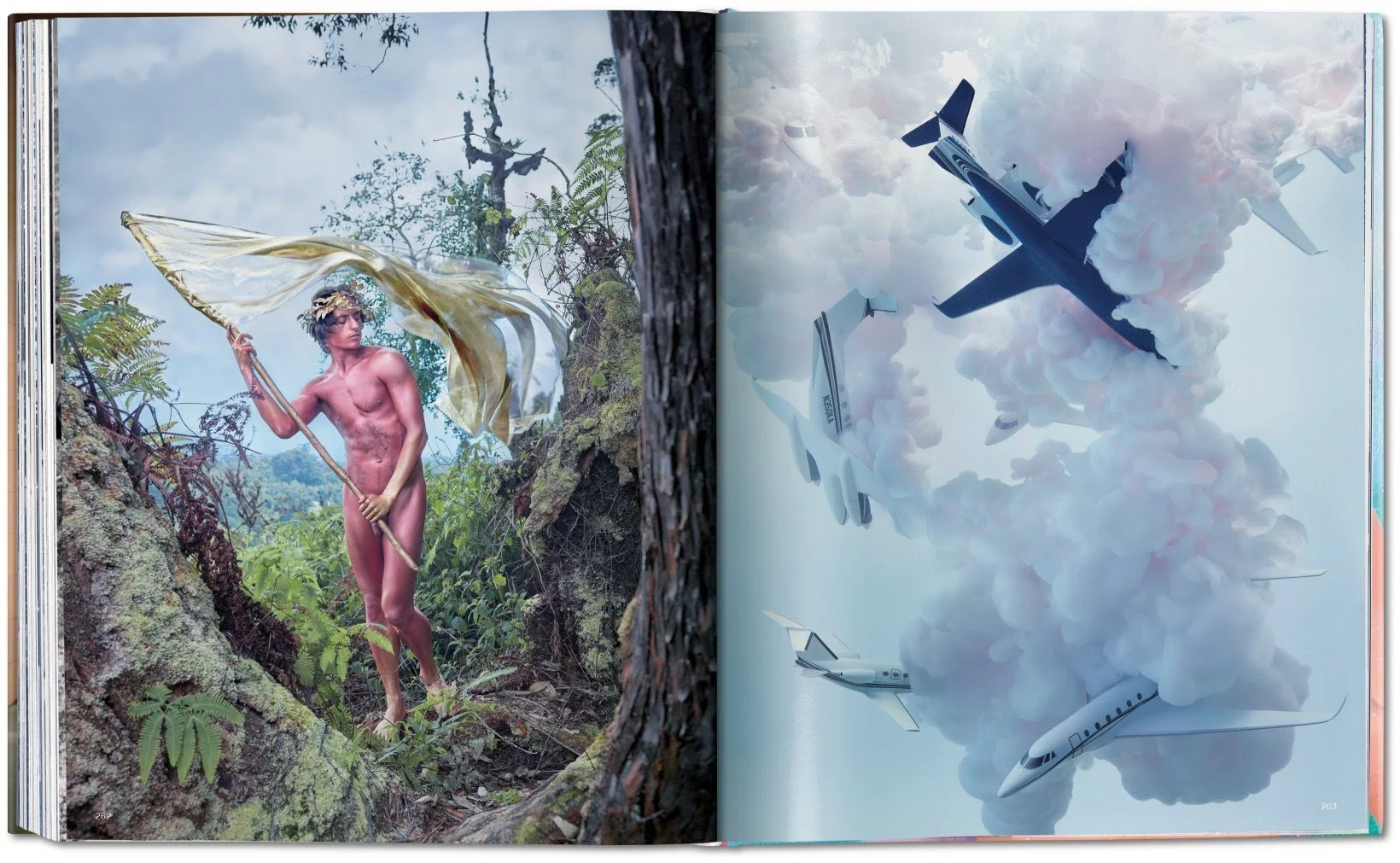
Diptych from David LaChapelle’s Lost + Found Part 1: Original Image Source.
LaChapelle's method across all four registers is consistent: exaggeration through artifice. The hypercolour he used is not natural but achieved through careful and considered retouching in post-production. His histrionic aesthetic not only made him an editorial-cum-advertising darling within the fashion, music, and screen industries but also offered him artistic legitimacy as a documenter of our culture, as a sort of zeitgeist first-responder.
For decades, this strategy of excess-as-exposure worked. We could easily distinguish between LaChapelle's constructed fantasy and the world we moved through - this was what made his images so compelling. The book's accompanying text on multiple websites described the Lost + Found and Good News series as "satirical commentary on the times we live in and the issues we face." But this satire depended on there being a recognisable "real" against which exaggeration could be measured and felt. That ground has collapsed. Not because LaChapelle's work has aged, become less celebrated, or lost its oil-slick lustre and neon glow, but because the conditions under which it was legible as satire and social critique have fundamentally and irreversibly shifted.
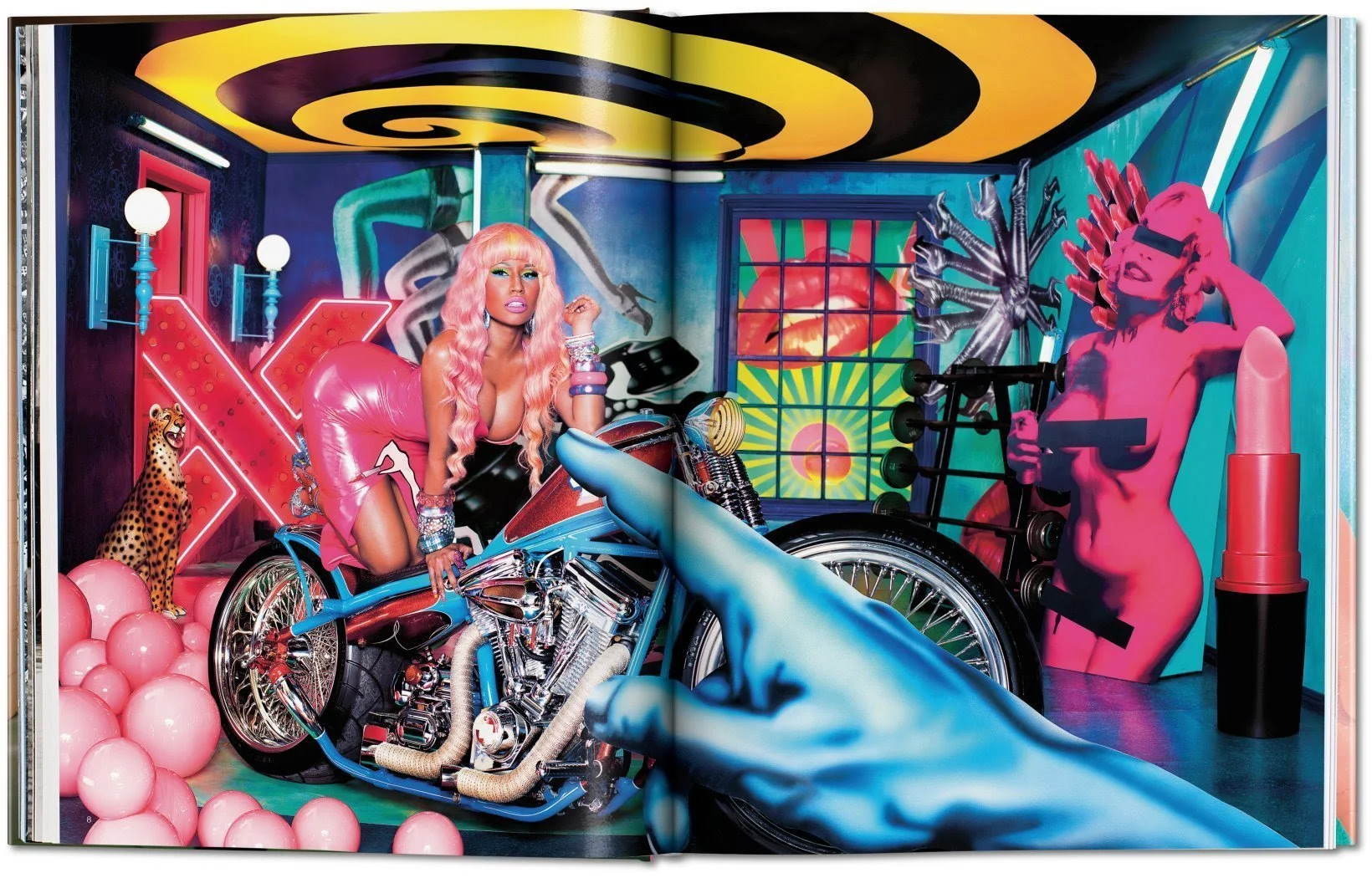
Rapper Nicki Minaj photographed for Lost + Found Part 1: Original Image Source.
In a landscape saturated with AI-generated imagery, the hyperreal and the entirely immaterial are now indistinguishable. A photograph cannot be trusted to document reality; even when that reality is merely a starting point that is then overproduced, polished, inverted, and stretched into something entirely new and different. The boundary between produced spectacle and unmediated life - the boundary that LaChapelle's work exploited so effectively - has become epistemically unstable. If everything now can be fabricated instantly with no original referent, then the visible markers of construction, reiteration, and creative direction that once signaled: "this is artifice, now read it as a critique" become meaningless.
This does not mean LaChapelle's work ceases to function. Rather, it ceases to function specifically as satire. The spotlight on celebrity obsession and capitalist creep, which he advances by foregrounding consumer culture, the commodification of bodies, and the absurdity of luxury in extreme scenarios, remains valid. These are equally provocations of systems that persist unchanged and have only deepened and intensified since the late 2010s. But the ability to use this excessive visual style as a political commentary that shouts ‘Look how extreme this is! And this extremity is merely an amplification or an oversimplification of what already exists!’ … That function is now archival.
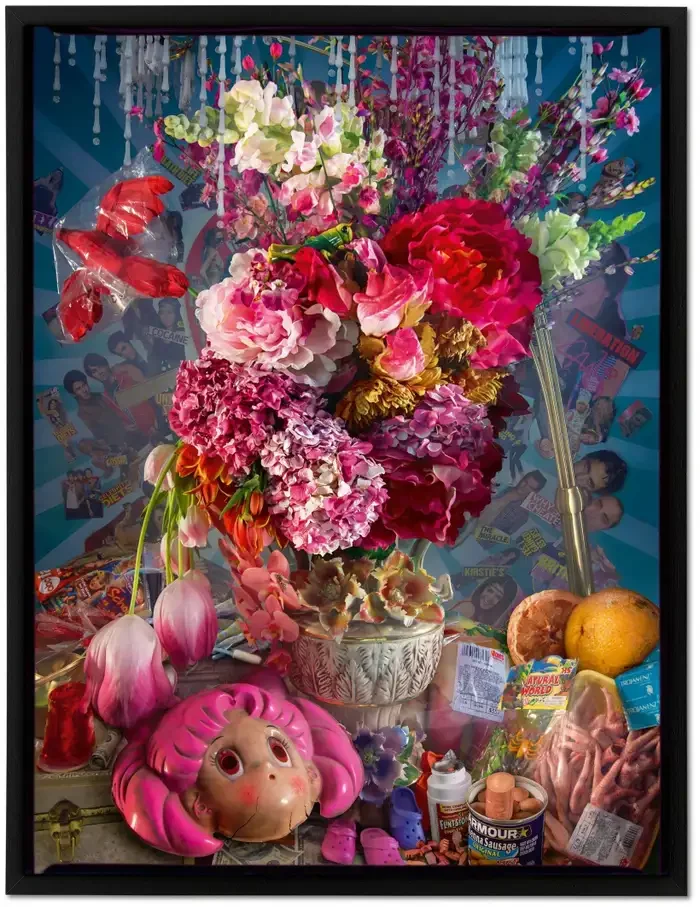
Still Life from Lost + Found, Good News Art Edition: Original Image Source
In an AI-led world, the new spectacular is the return to the real. The real real, not the hyperreal. An unretouched image becomes more suspicious, potent, and interesting than a polished or modified one. Strangely, the artistic extreme is now the level to which one can evidence their unmediated access to reality.
The photographs of destroyed homes with elegantly dressed figures wandering through them, the neon rooms where childhood dolls are posed alongside adult bodies, and the industrial landscapes lit like stage sets are still powerful images. They still elicit visceral reactions. But they can no longer function as satire, because satire requires a shared reality against which their exaggeration can be measured and rationalised.
I would argue that the lead-up to the COVID-19 pandemic represented the last time the visible construction of an image could make explicit the hidden systems and social stratifications governing lived experience. This shift means that LaChapelle's method of artifice and spectacle, which was meant to signal to audiences "question what you're seeing in my world, then question what's constructed in yours” now feels somewhat obsolete. LaChapelle's Lost + Found and Good News becomes more than a beautiful coffee table book; it takes on the role of a prophetic document. This document does not show us what would come, but accidentally evidences what we would lose and never get back. It captures the final moment when you could meaningfully use artifice to critique artifice, when exaggeration could still lead us, however indirectly and messily, to some fundamental truths.